Peptide Capsules
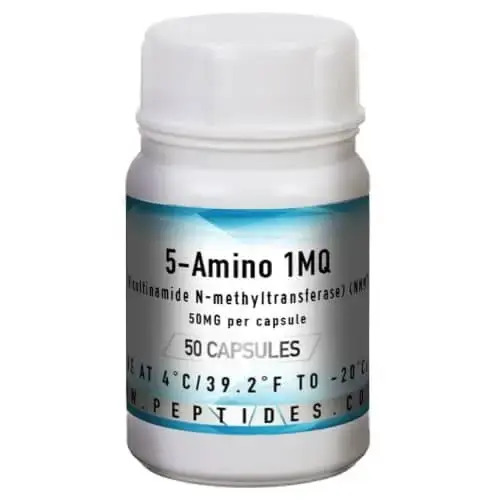
5-Amino 1MQ Capsules
50MG per capsule
R4 000Excl. VAT
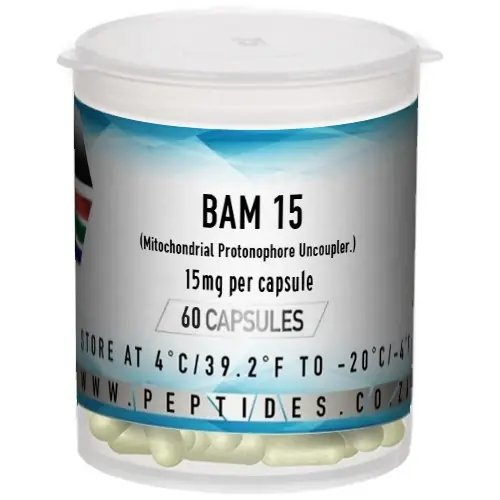
15mg per capsule
R1 400Excl. VAT
Or 4 interest-free payments with 
Aids Obesity and metabolic disorders, kidney disease, potentially cancer recovery, sepsis, neurodegeneration, vascular health, and immune functions
Scientific Name: N,N-bis(2-fluorophenyl)-oxadiazolo[3,4-b]pyrazine-5,6-diamine
Take 1 capsule per day for the first week, 2 capsules per day thereafter. Use before breakfast. One bottle should last 30 days - 60 days
BAM15 is a mitochondrial uncoupler that has shown potential in various research areas, including obesity, kidney injury, and cancer treatment. It works by increasing energy expenditure and metabolic flexibility, and it has been shown to have less cytotoxicity compared to other uncouplers.
What it is: BAM15 is a small molecule that acts as a protonophore, meaning it facilitates the movement of protons across the mitochondrial membrane. This process uncouples oxidative phosphorylation, the process that normally couples nutrient metabolism to ATP (energy) production.
Increases energy expenditure: By uncoupling oxidative phosphorylation, BAM15 allows for increased oxygen consumption and substrate oxidation, leading to higher energy expenditure.
Modulates metabolism: BAM15 can improve body composition and glycemic control, even without significant weight loss.
Protects against kidney injury: Studies have shown that BAM15 can protect against kidney damage from ischemia-reperfusion injury and cold storage damage.
Potential for other treatments: BAM15 is being explored for potential use in treating obesity, sepsis, and cancer.
Cell penetrant and potent: BAM15 can easily enter cells and effectively uncouple mitochondria.
Less cytotoxic: Compared to other uncouplers, BAM15 has shown reduced cytotoxicity.
Targets specific pathways: It can activate signaling pathways like AMPK and PGC-1α, which are involved in cellular energy metabolism.
Short half-life: BAM15 has a relatively short half-life in the body, requiring sustained delivery for prolonged effects.
Obesity and metabolic disorders: BAM15 has shown promise in animal models for reducing obesity and improving glycemic control.
Kidney disease: It has demonstrated protective effects against kidney injury in various models.
Cancer: Research suggests BAM15 may have potential in cancer treatment by affecting mitochondrial function and inducing apoptosis.
Sepsis: BAM15 has been shown to be effective in treating sepsis in mouse models.
Neurodegeneration: Studies in C. elegans suggest BAM15 may have a role in relieving neurodegeneration and extending lifespan.
Vascular health: BAM15 has been shown to inhibit artery constriction and activate AMPK in vascular smooth muscle cells.
Immune function: BAM15 can modulate immune responses, potentially by affecting inflammation and neutrophil infiltration.
Peptide Capsules
50MG per capsule
R4 000Excl. VAT
Peptide Capsules
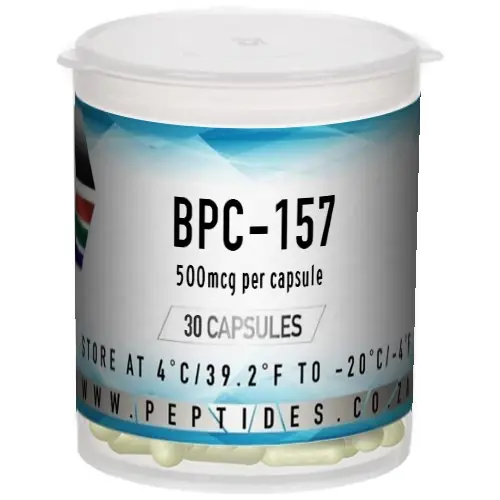
30 Capsules
R900Excl. VAT
Peptide Capsules
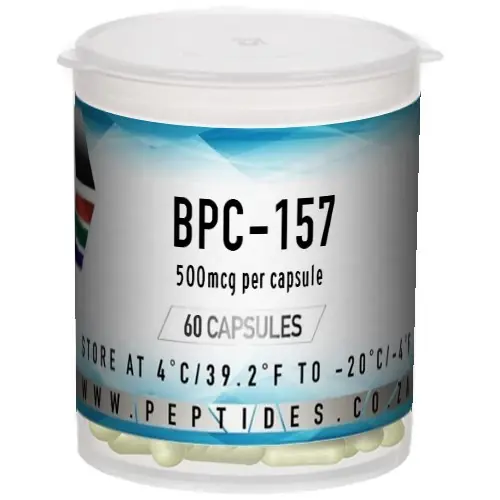
60 Capsules
R1 650Excl. VAT
Peptide Capsules
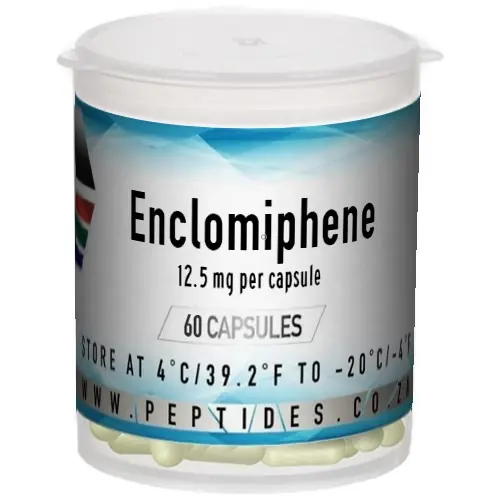
60 Capsules
R1 250Excl. VAT