
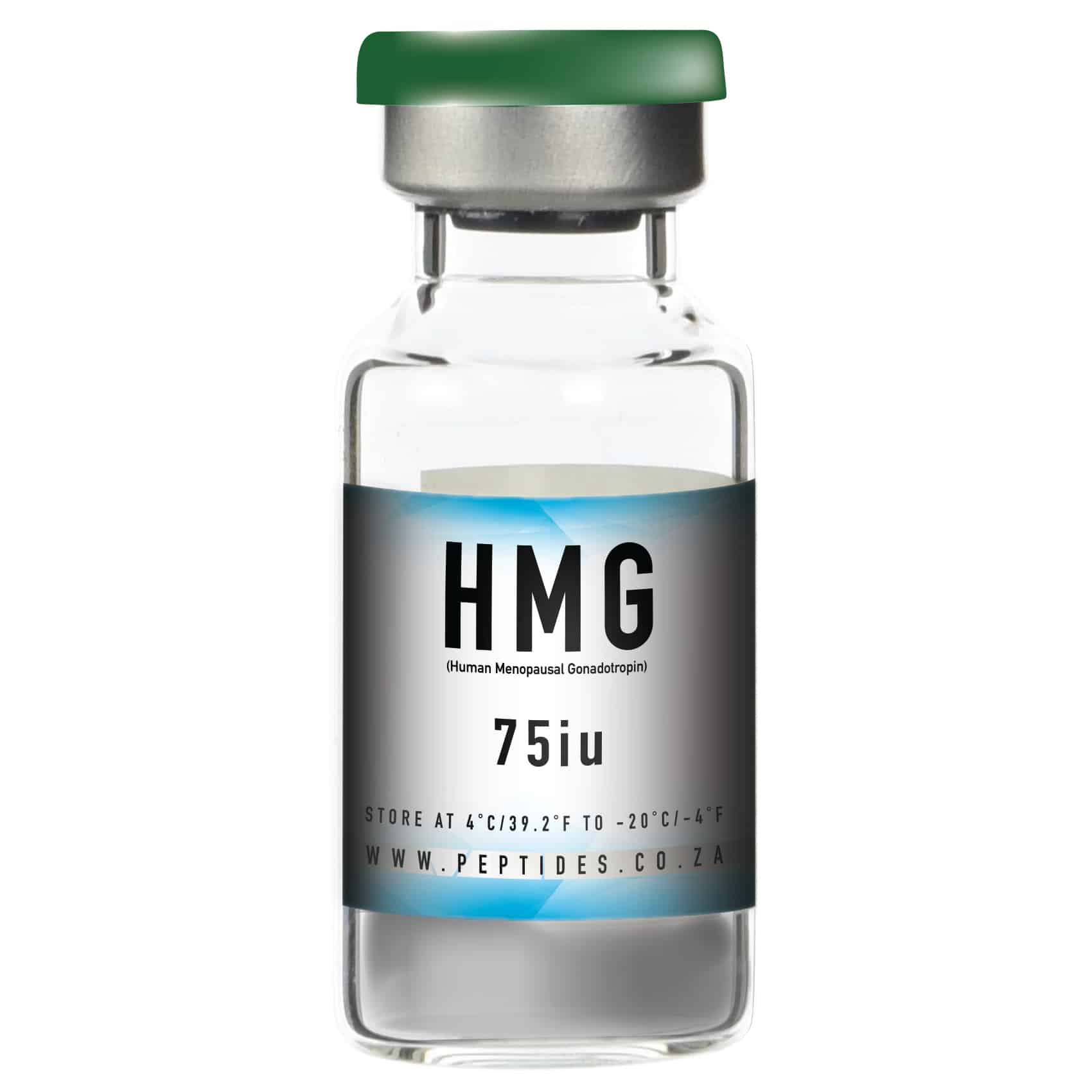
HMG Peptide Supplement – 75 iu per vial
R750,00 -Excl. VAT
In women – Assist with conceiving, and fertility. In Men – Increase production of natural testosterone. Assist with testicular dystrophy. Increased libido. Post Cycle Therapy (PCT) for men and women
Description
Description
HMG – Human Menopausal Gonadotropin for Hormonal Balance and Fertility Support
Overview
Human Menopausal Gonadotropin (HMG) is a hormone treatment derived from the urine of postmenopausal women. It is a combination of two hormones, luteinizing hormone (LH) and follicle-stimulating hormone (FSH), which play essential roles in regulating the reproductive system. HMG is primarily used in fertility treatments for both men and women, helping to stimulate the production of eggs in women and support testosterone production in men. It is also explored for its potential to support overall hormonal balance and reproductive health.
Benefits
- Fertility enhancement: HMG helps stimulate ovulation in women, making it a key part of assisted reproductive technologies like in vitro fertilization (IVF). It promotes the maturation of eggs in the ovaries, increasing the chances of successful conception.
- Boosts testosterone production in men: In men, HMG supports the production of testosterone by stimulating the testes. This can be beneficial for men with low testosterone levels or those undergoing treatments like testosterone replacement therapy.
- Supports hormonal balance: HMG helps regulate hormonal levels in both men and women, promoting overall reproductive health and hormonal equilibrium.
- Improves egg quality and quantity: For women undergoing fertility treatments, HMG can improve egg quality and enhance the chances of pregnancy by stimulating healthy ovarian function.
- Enhances sperm production: In addition to boosting testosterone, HMG can improve sperm count and quality, which may aid in male fertility.
How It Works
HMG works by mimicking the actions of the natural LH and FSH hormones, which are critical for the regulation of the reproductive system. In women, HMG stimulates the ovaries to produce mature eggs, while in men, it stimulates the testes to produce testosterone and sperm. This dual action makes HMG an effective tool for treating fertility issues in both genders. By boosting the body’s natural hormone production, HMG supports reproductive health and hormonal function.
Dosing (For Research and Medical Use)
- Typical dosage for women:
- 150–225 IU per day
- Administered via subcutaneous injection, usually for a period of 10–14 days during the ovulation cycle.
- Typical dosage for men:
- 1,000–2,000 IU per week
- Often used in combination with other treatments, such as human chorionic gonadotropin (hCG), for optimal testosterone and sperm production.
- Cycle length: Women typically use HMG for up to 14 days as part of an IVF cycle, while men may use it for several months depending on their specific fertility goals.
- Injection frequency: Daily or every other day, depending on individual needs and the treatment plan.
- Starting dose: A common starting dose for women is 150 IU per day, while men may start with 1,000 IU per week.
- Dose adjustments: Dosing may be adjusted based on response, but it’s important to follow the guidance of a healthcare provider to avoid complications and ensure proper hormonal stimulation.
Expected Results
- Improved fertility: Women using HMG for ovulation stimulation can expect increased egg production and a higher chance of successful conception, especially when used as part of fertility treatments like IVF.
- Increased testosterone levels: Men with low testosterone can see an improvement in hormone levels, as well as an increase in sperm production.
- Enhanced reproductive health: HMG promotes better hormonal balance and healthier reproductive function in both men and women.
- Increased sperm count and quality: Men undergoing fertility treatments may notice improvements in sperm count and motility, which are essential for conception.
- Better egg quality: For women trying to conceive, HMG can improve the quality of eggs, contributing to a higher success rate in fertility treatments.
Side Effects
- Common side effects:
- Mild injection site reactions, such as redness or swelling
- Headaches or dizziness
- Abdominal bloating or discomfort
- Mood swings
- Less common side effects:
- Ovarian hyperstimulation syndrome (OHSS) in women, characterized by swollen ovaries and fluid retention
- Fatigue or tiredness
- Acne or skin irritation
- Serious side effects (rare):
- Severe abdominal pain or pelvic discomfort (indicative of OHSS)
- Allergic reactions, including rash, swelling, or difficulty breathing
- Multiple pregnancies (twins or more) due to excessive stimulation of the ovaries
- Most side effects are mild and transient. Adjusting the dose or frequency of injections can help alleviate many issues.
Warnings
- HMG should be used with caution in individuals with ovarian cysts, endometriosis, or other reproductive conditions, as it can exacerbate certain symptoms.
- Women undergoing fertility treatment with HMG should be monitored closely for ovarian hyperstimulation syndrome (OHSS), which can cause serious complications.
- HMG is not recommended during pregnancy, as it may interfere with normal pregnancy development.
- Regular blood tests and ultrasounds are recommended to monitor hormone levels and ovarian response during HMG therapy.
- Men with certain health conditions, such as prostate disorders, should consult with a healthcare provider before using HMG.
- Always consult with a healthcare provider before beginning HMG treatment to ensure it is appropriate for your specific condition and goals.
Summary
HMG (Human Menopausal Gonadotropin) is a peptide used primarily for enhancing fertility in both men and women. By mimicking the natural hormones LH and FSH, it supports egg production in women and testosterone and sperm production in men. It is widely used in fertility treatments and for improving reproductive health. While generally safe when used as directed, HMG should be administered under medical supervision to ensure proper dosing and to minimize the risk of side effects such as ovarian hyperstimulation syndrome or allergic reactions. Regular monitoring is essential for optimal results and safety during treatment.
Additional information
Additional information
| Dimensions | 1 × 1 × 1 cm |
|---|
Reviews (0)
Reviews
There are no reviews yet.